
Select options
This product has multiple variants. The options may be chosen on the product page
D54.00
+5% vat will be applied at checkout
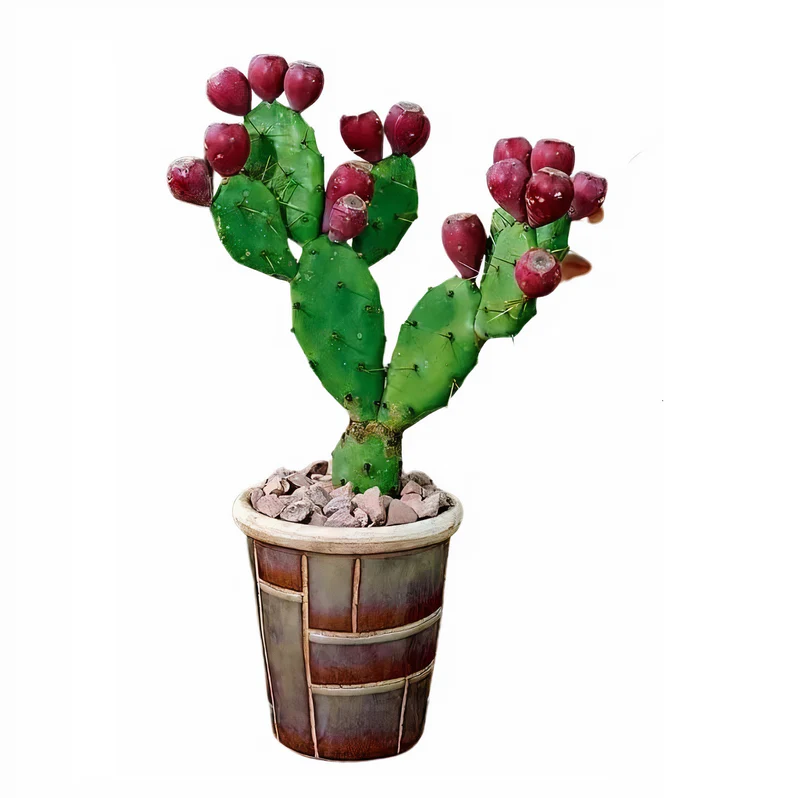
Succulent plant native to Mexico, valued for its beauty and edible fruits
Covered with long spines and tiny hooked glochids that can attach to skin
Shallow root system extending up to 13 inches deep but spreading widely
Grows 1–2.5 meters tall with thick, flat, paddle-like stems (pads)
Produces large, showy flowers in white, yellow, or orange shades
Bears juicy, sweet fruits commonly used fresh or in jams and beverages
Hardy, low-maintenance plant suitable for dry, sunny environments
The Ficus Opuntia, commonly known as the Prickly Pear, is a fascinating succulent plant native to Mexico that has become a popular choice for gardens and landscapes in the UAE. Its unique structure, low maintenance, and vibrant flowers make it both an attractive and practical addition to any outdoor space.
The Ficus Opuntia is covered in sharp thorns, about half an inch long, along with smaller hooked thorns called glochids. These glochids can easily attach to skin and are difficult to remove, so careful handling is essential when planting or pruning. Despite its prickly exterior, the plant is admired for its ornamental beauty and its juicy, edible fruits.
The roots of the Prickly Pear are shallow, extending up to 13 inches underground while covering a wide surface area. This makes the plant resilient and easy to cultivate in a variety of soil types, especially in arid climates like the UAE.
The Prickly Pear grows to a height of 1–2.5 meters, making it a striking feature in gardens or as a standalone statement plant. Its flowers are highly showy, ranging from white to yellow to orange, depending on the variety. These vibrant blooms not only enhance the visual appeal but also attract pollinators, adding life to your outdoor spaces.
Ficus Opuntia thrives in the UAE’s warm, sunny climate. It requires minimal watering and can tolerate drought conditions, making it perfect for local gardens where water conservation is important. Plant it in well-draining soil with plenty of sunlight to enjoy healthy growth and vibrant flowers.
One of the biggest advantages of the Prickly Pear is its simplicity. It doesn’t need frequent care, pruning, or fertilizer. While it’s generally resilient, occasional removal of dead pads and careful management of its thorns will keep it looking its best. Its fruits can also be harvested once mature, adding an extra dimension to this ornamental plant.
Ornamental Appeal: Unique structure, vibrant flowers, and impressive height make it a visual centerpiece.
Edible Fruits: Produces juicy fruits that can be eaten fresh or used in recipes.
Low Maintenance: Drought-tolerant and hardy, ideal for UAE gardens.
Wildlife-Friendly: Flowers attract pollinators, supporting garden biodiversity.
The Ficus Opuntia Prickly Pear is more than just a cactus — it’s a versatile and visually striking plant that thrives in UAE conditions. With minimal care and maximum impact, it’s perfect for gardeners looking to add texture, color, and a touch of the exotic to their outdoor spaces.
1. Is Ficus Opuntia suitable for UAE gardens?
Yes, it thrives in the UAE’s sunny, warm climate and is perfect for low-maintenance, drought-tolerant landscaping.
2. How tall does the Prickly Pear grow?
It can reach 1–2.5 meters in height, making it a striking feature in gardens or outdoor spaces.
3. How should I care for Ficus Opuntia?
Plant in well-draining soil with full sunlight, water sparingly, and remove dead pads occasionally to maintain its appearance.
4. Are the fruits of Ficus Opuntia edible?
Yes, the plant produces juicy, sweet fruits that can be eaten fresh or used in recipes.
5. Are the thorns dangerous?
The Prickly Pear has sharp thorns and small hooked glochids that can stick to skin. Handle with care when planting or pruning.
6. What colors are the flowers of Ficus Opuntia?
Depending on the variety, flowers can be white, yellow, or orange, adding vibrant color to your garden.
| Size | 30cm – 40cm (Pot: 08L) |
|---|


Ali from Dubai –
The flat pads and bright green color make it stand out in my garden. Beautiful
Soniya Shahid –
Nice plant with a beautiful natural shape
Saeeda –
This Prickly Pear is fantastic! Healthy, well-grown, and already showing small new pads. I love how strong and bold it looks — a real centerpiece for my outdoor garden.
Fatima –
It’s a nice cactus
Noura from Ras Al Khaimah –
Beautiful and healthy cactus! The shape is perfect, and it gives that authentic desert garden look I wanted. Low maintenance and very decorative — totally worth it